
By Malik Chohra
Harness engineering for React Native: why scaffolding beats prompts
The model is the swappable part. The harness around it, your conventions, memory, and standards, is what makes an AI build your React Native app like it has worked on it for months.
You ask the agent for a new screen. It builds one in default blue, ignores the navigator you already use, and reaches for a styling pattern you dropped three months ago. Not because the model is bad. Because it started the session knowing nothing about your app. You fix it, you re-explain your conventions, and tomorrow you do it again. That re-explaining is the tax, and a harness is how you stop paying it.
The term going around for this is harness engineering. Here is what it means for a React Native codebase, and why it does more for your output than any prompt ever did.
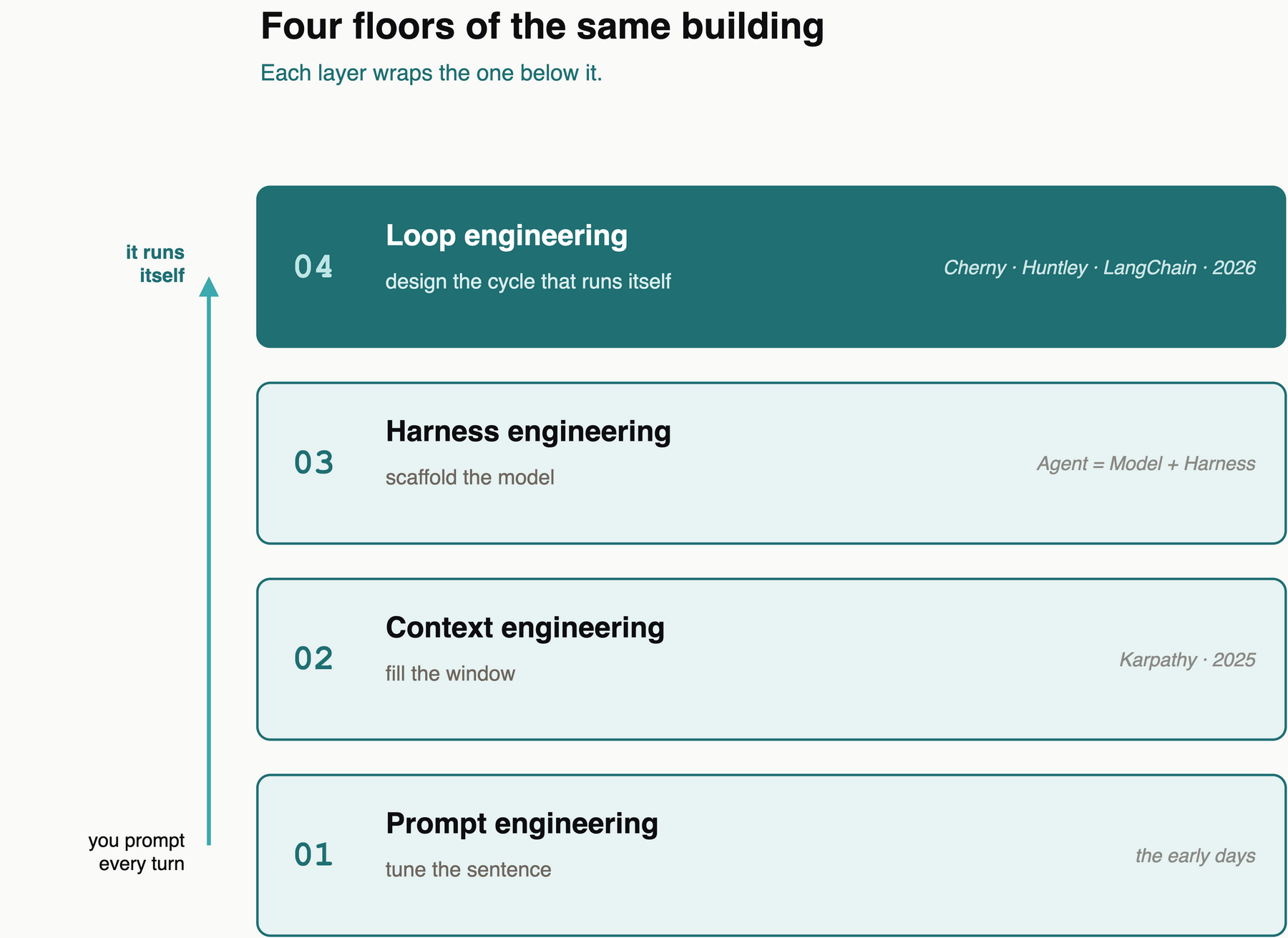
Prompt, then context, then the wall
For a while the fix was always the prompt. "Act as a senior React Native engineer." "Return only the diff." A notes file of magic openers. It works until you ask about your own app, because a clean prompt still produces a confident answer to a generic question, and your questions are not generic.
So you move to context engineering: stop tuning words, start assembling the window. Paste the component. Paste the conventions. The answers jump. Then you hit the wall, and the wall is you, hand-assembling the same context every morning and watching it evaporate when the session ends.
A harness is the scaffolding the model builds against
A harness is everything you put around the model so it can work in your actual project: your conventions, your memory, your standards, your access. The model is the swappable part. The harness is the part that makes it useful on *your* RN app, and it has roughly five pieces.
Personalisation: a standing file that says who you are and how you build. Context: the project's rules, always present. Memory: small facts the model reads before it acts. Action: real access to the repo and tooling. Delegation: heavy grunt work runs in its own context and hands back the answer. Skills and scheduled jobs sit on top as multipliers.
How it looks on a React Native project
Start with one file. A CLAUDE.md (or your agent's equivalent) at the repo root that states the things the model keeps getting wrong: the navigation pattern, the theme tokens, the state approach, the folders that are off limits. Then a handful of memory facts, one per line: "screens are registered in AppNavigator", "the accent is teal, retired blue", "we use the testing-library setup in test/."
That is the whole move. The agent stops opening every session as a stranger and starts as someone who has worked on this codebase for months. The default-blue screen problem disappears because the answer is no longer a guess, it is read from a file. I went deeper on this in the AI-native codebase piece and the Claude Code RN workflow.
The harness rots, and maintaining it is the job
Here is the part the hype leaves out. A harness is not a one-time build. Memory files go stale, and a stale fact is worse than no fact because the model trusts it. A launch date drifts, a convention changes, and now the scaffolding is feeding the agent confident lies about your own app. The people running bigger setups than mine prune on a schedule. Owning a harness does nothing. Maintaining it is the entire return, the same way a pile of AI-generated slop is what you get when the structure is missing.
You don't have to build the scaffold from scratch
The foundation, the conventions, the navigation, the test setup, the rules an agent reads first, is the same on most React Native apps. Rebuilding it per project is the slow part.
That is what AI Mobile Launcher ships: a React Native and Expo boilerplate with the harness already in place, the standing context and conventions written down so the agent starts warm on day one instead of guessing for a week. You bring the product. The scaffold is already there.
If you are starting from zero, you do not need a course. You need one standing file, a few memory facts, and the discipline to add a line every time you catch yourself explaining the same thing twice. That is a harness. Everything past it is refinement.
*First published on Code Meet AI.*